
※「landscape」は直訳すると「景観」ですが、この文脈では「業界全体の構成や分類体系」を意味するため、日本語では自然さを優先して「全体像」と訳しています。
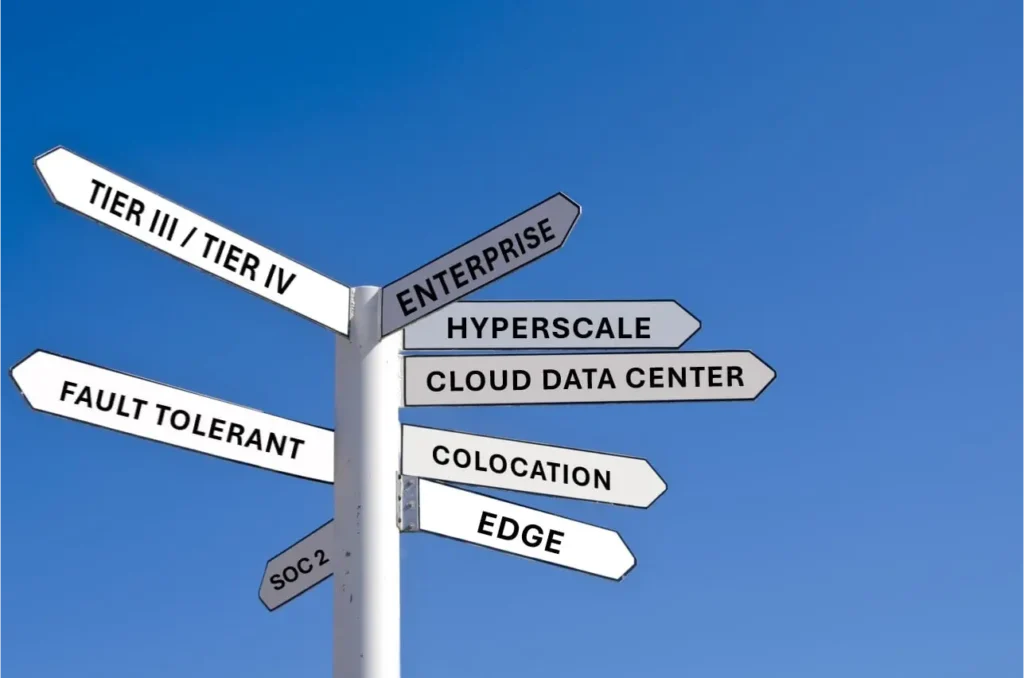
The many different names used to describe data centers, based on their characteristics and function or industry ratings and certifications, can overlap and cause confusion. Understanding the distinctions is key to grasping the broader data center landscape.
データセンターを表現するために使われるさまざまな名称は、その特性や用途、あるいは業界の評価基準や認証に基づいて分類されています。しかし、それらの分類は互いに重複する場合もあり、混乱を招くことがあります。こうした違いを正しく理解することが、データセンター全体の構成を把握するうえで重要です。
※「landscape」は前段と同様に「全体像」と意訳可能ですが、この段落では文脈上「全体の構成」とすることで自然な日本語に調整しています。
In This Article
- • What is a hyperscale data center?
- • What is a cloud data center?
- • What is a colocation data center?
- • What is an enterprise data center?
- • What is an edge data center?
- • What are data center tiers?
- • Other ways to classify a data center
- • Fluke Networks has you covered
- • Keep learning
この記事の内容
- ハイパースケールデータセンターとは?
- クラウドデータセンターとは?
- コロケーションデータセンターとは?
- エンタープライズデータセンターとは?
- エッジデータセンターとは?
- データセンターのティアとは?
- データセンターを分類するその他の方法
- Fluke Networks がサポートします
- さらに学ぶ
What is a hyperscale data center?
ハイパースケールデータセンターとは?
What is a hyperscale data center? Hyperscale data centers are enormous facilities owned by major tech companies like Google, Amazon, Meta, Microsoft, and others. Tencent, Huawei, Alibaba, and Baidu are well-known hyperscalers in the Chinese market. These companies, often called "hyperscalers," use these data facilities to power their vast cloud services.
ハイパースケールデータセンターとは、Google、Amazon、Meta、Microsoft などの大手テクノロジー企業が所有する非常に大規模なデータセンター施設のことです。中国市場では、Tencent、Huawei、Alibaba、Baidu などが代表的なハイパースケーラーとして知られています。これらの企業は一般に「ハイパースケーラー」と呼ばれ、自社の大規模なクラウドサービスを支えるために、こうしたデータセンターを運用しています。
※ “enormous facilities” は直訳すると「巨大な施設」ですが、日本語として自然で技術文書にも適した表現として「非常に大規模なデータセンター施設」としています。
※ “power their vast cloud services” は直訳の「クラウドサービスに電力を供給する」ではなく、「支える」と意訳しています。
What sets hyperscale facilities apart is their immense size and scale, housing tens of thousands of servers and occupying millions of square feet of space. They are designed to handle large-scale workloads for services like social media, video streaming, and artificial intelligence (AI). Many also offer various "as a service" solutions, providing scalable and on-demand platforms, software, infrastructure, and storage to businesses.
ハイパースケール施設を特徴づけているのは、その圧倒的な規模です。数万台規模のサーバーを収容し、数百万平方フィートもの広大なスペースを占有しています。これらの施設は、ソーシャルメディア、動画配信、人工知能(AI)などのサービスに必要な大規模ワークロードを処理できるよう設計されています。また、多くのハイパースケーラーは、さまざまな「○○ as a Service」ソリューションも提供しており、企業向けに拡張性が高く、必要に応じて利用可能なプラットフォーム、ソフトウェア、インフラ、ストレージをサービスとして提供しています。
※ “immense size and scale” は直訳すると「巨大なサイズと規模」ですが、日本語では冗長になるため「圧倒的な規模」と自然に整理しています。
※ “occupying millions of square feet of space” は、日本の技術記事として読みやすさを優先し、厳密な面積換算はせず「数百万平方フィートもの広大なスペース」としています。
※ “as a service” は業界で一般的に使われる表現のため、原文ニュアンスを維持して残しています。
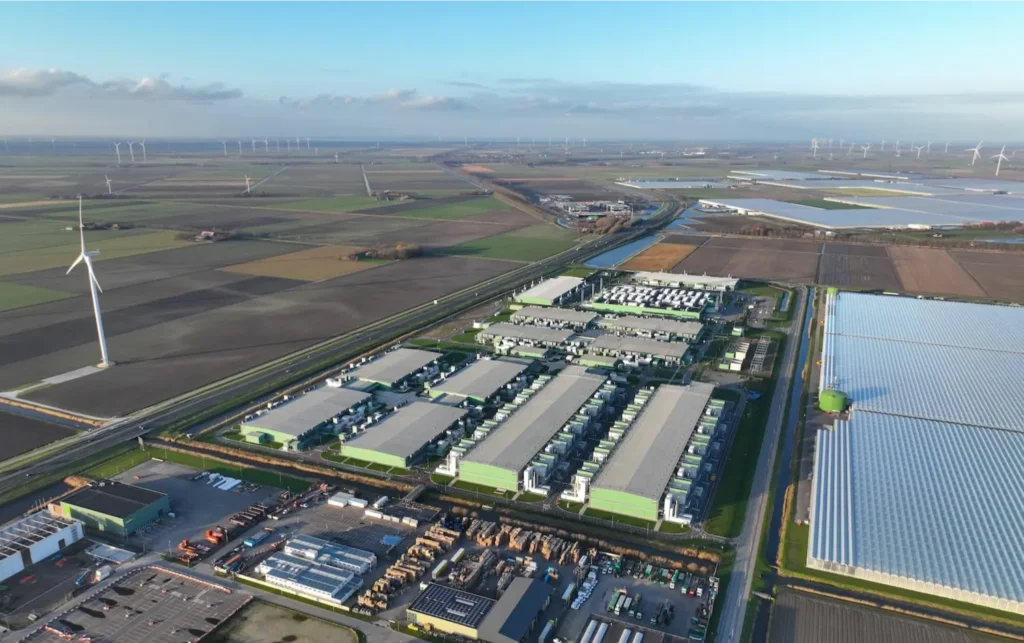
Although hyperscale data centers make up less than 10% of all data centers globally, they are massive power consumers. They consume 100 megawatts or more annually, with some reaching gigawatt levels of power demand. They are estimated to account for 60 to 70% of all U.S. data center power consumption. Such high power usage makes advanced cooling and sustainability initiatives a critical focus for these facilities. In terms of infrastructure, hyperscale data centers support next-generation 400-gigabit and 800-gigabit speeds, and their networks feature extensive fiber cabling that can reach tens of thousands of miles in length.
ハイパースケールデータセンターは、世界中のデータセンター全体の10%未満しか占めていないものの、非常に大量の電力を消費しています。年間で100メガワット以上を消費し、中にはギガワット級の電力需要に達する施設もあります。米国におけるデータセンター全体の電力消費量のうち、60〜70%を占めているとも推定されています。このような高い電力消費のため、高度な冷却技術やサステナビリティへの取り組みが、これらの施設における重要な課題となっています。インフラ面では、ハイパースケールデータセンターは次世代の400ギガビットおよび800ギガビット通信をサポートしており、そのネットワークには総延長が数万マイルに達する大規模な光ファイバー配線が採用されています。
※ “massive power consumers” は直訳の「巨大な電力消費者」では不自然なため、「非常に大量の電力を消費しています」としています。
※ “critical focus” は「重要な焦点」ではなく、日本語として自然な「重要な課題」と意訳しています。
※ “fiber cabling” は技術文脈に合わせて「光ファイバー配線」と訳しています。
What is a cloud data center?
クラウドデータセンターとは?
A cloud data center is a facility that provides cloud services to customers over the internet. The cloud provider owns and manages the servers, networks, and storage, and businesses pay to use them when needed. While hyperscale data centers are a type of cloud data center, not all cloud providers are considered hyperscalers.
クラウドデータセンターとは、インターネットを通じて顧客にクラウドサービスを提供する施設のことです。クラウドプロバイダーがサーバー、ネットワーク、ストレージを所有・管理し、企業は必要に応じてそれらを利用するための料金を支払います。なお、ハイパースケールデータセンターはクラウドデータセンターの一種ですが、すべてのクラウドプロバイダーがハイパースケーラーに分類されるわけではありません。
Many smaller providers offer specialized cloud-based applications and services. For example, Salesforce is a cloud provider that offers software-as-a-service for customer relationship management (CRM). Others focus on storage, archiving, cybersecurity, and software development for startups and small to medium-sized businesses. A newer, specialized cloud data center is the neocloud, a facility that provides high-performance computing infrastructure for AI workloads. Unlike hyperscalers that offer a wide range of services, neoclouds are specifically designed to support AI, often providing GPU-as-a-service for AI developers.
多くの中小規模のプロバイダーは、特定用途向けのクラウドベースのアプリケーションやサービスを提供しています。たとえば、Salesforce は、顧客関係管理(CRM)のための Software as a Service(SaaS)を提供するクラウドプロバイダーです。そのほかにも、ストレージ、アーカイブ、サイバーセキュリティ、ソフトウェア開発などに特化し、スタートアップ企業や中小企業向けのサービスを提供している事業者があります。また、新しいタイプの専門特化型クラウドデータセンターとして「ネオクラウド(neocloud)」があります。これは、AIワークロード向けに高性能コンピューティング(HPC)インフラを提供する施設です。幅広いサービスを提供するハイパースケーラーとは異なり、ネオクラウドはAI支援に特化して設計されており、多くの場合、AI開発者向けに GPU as a Service を提供しています。
※ “software-as-a-service” は一般的な業界用語であるため、「Software as a Service(SaaS)」として補足しています。
※ “GPU-as-a-service” も同様に業界用語として残し、日本語文中で自然につながるよう調整しています。
What is a colocation data center?
コロケーションデータセンターとは?
A colocation data center, often referred to as a multi-tenant data center or simply a colo, is a facility where multiple businesses rent space to house their servers and other IT equipment. Instead of building and maintaining their own data centers, enterprise companies like financial institutions, healthcare providers, and e-commerce companies often lease colo space to reduce costs, improve reliability, and enhance scalability. It's also a popular choice for disaster recovery. A colocation tenant could also be a cloud service provider (including a hyperscaler) needing space for specialized applications or proximity to customers, or a managed service provider (MSP) that handles day-to-day IT tasks for other organizations.
コロケーションデータセンターは、「マルチテナントデータセンター」あるいは単に「colo(コロ)」とも呼ばれ、複数の企業がサーバーやその他のIT機器を設置するためのスペースを借りて利用する施設です。金融機関、医療機関、eコマース企業などのエンタープライズ企業は、自社でデータセンターを構築・運用する代わりに、コロケーションスペースを借りることで、コスト削減、信頼性向上、拡張性強化を図ることが一般的です。また、災害対策(ディザスタリカバリー)用途としても広く利用されています。コロケーションの利用者(テナント)には、特定用途向けアプリケーションのためのスペース確保や、顧客に近い場所での運用を目的としたクラウドサービスプロバイダー(ハイパースケーラーを含む)も存在します。また、他組織の日常的なIT運用を代行するマネージドサービスプロバイダー(MSP)が利用するケースもあります。
※ “colo” は業界で一般的に使われる略称のため、「colo(コロ)」として補足しています。
※ “enterprise companies” は単純な「企業」ではなく、日本のIT業界で自然な「エンタープライズ企業」としています。
※ “proximity to customers” は直訳の「顧客への近接性」では不自然なため、「顧客に近い場所での運用」と自然に意訳しています。
Colocation providers, such as CyrusOne, Digital Realty, QTS, and Equinix, typically offer tenant space by the rack, cabinet, cage, or even an entire suite or data hall. In turn, the colocation provider ensures adequate infrastructure to support their customers' needs, including power, cooling, bandwidth, and security. Some colocation providers also offer hybrid cloud infrastructure to tenants, offering direct access to cloud-based services.
CyrusOne、Digital Realty、QTS、Equinix などのコロケーション事業者は、通常、ラック単位、キャビネット単位、ケージ単位、さらには専用スイートやデータホール全体単位でテナント向けスペースを提供しています。一方で、コロケーション事業者は、顧客の要件を満たすために必要なインフラも提供します。これには、電力、冷却、帯域幅、セキュリティなどが含まれます。また、一部のコロケーション事業者は、テナント向けにハイブリッドクラウドインフラも提供しており、クラウドベースのサービスへ直接アクセスできる環境を提供しています。
※ “cage” はデータセンター業界で一般的な区画形態のため、「ケージ」とカタカナ表記しています。
※ “suite” はオフィス用途ではなく、専用利用区画を意味するため「専用スイート」としています。
※ “bandwidth” はネットワーク分野で一般的な訳語に合わせて「帯域幅」としています。
The type of colocation data center often depends on its purpose and the size of the rented space. A retail colocation tends to have smaller racks or cages, while a wholesale facility leases large blocks of space to a single customer. The term "carrier hotel" is often used to describe a colocation facility that focuses on connecting customers to various network service providers, such as AT&T or Verizon. A critical feature of a colocation data center is the meet-me room (MMR), a centralized space with fiber cross-connects that acts as a hub for customers to connect to one or more carriers.
コロケーションデータセンターの種類は、その用途や賃貸スペースの規模によって分類されることが一般的です。リテール型コロケーションは比較的小規模なラックやケージを提供する傾向がある一方、ホールセール型施設では、大規模なスペース区画を単一顧客に貸し出します。また、「キャリアホテル」という用語は、AT&T や Verizon など、複数のネットワークサービスプロバイダーへの接続を重視したコロケーション施設を指す際によく使われます。コロケーションデータセンターにおける重要な設備の一つが「MMR(Meet-Me Room)」です。これは、光ファイバーのクロスコネクトを集約した中央接続エリアであり、顧客が1社または複数の通信キャリアへ接続するためのハブとして機能します。
※ “retail colocation” と “wholesale facility” は、日本国内でも業界用語として「リテール型」「ホールセール型」が使われるため、それに合わせています。
※ “carrier hotel” は業界で定着した用語のためカタカナ表記を採用しています。
※ “fiber cross-connects” はデータセンター業界の実務用語に合わせて「光ファイバーのクロスコネクト」と訳しています。
What is an enterprise data center?
エンタープライズデータセンターとは?
An enterprise data center is a facility owned and operated by a single organization to support its specific business needs. These private facilities may be located on premises alongside other business operations or at a separate off-site location. Many organizations today use a hybrid approach where they house sensitive or critical IT resources within their own enterprise data centers, while leveraging cloud-based services for storage and common business applications.
エンタープライズデータセンターとは、特定の組織が自社の業務要件を支えるために所有・運用するデータセンター施設のことです。こうした専用施設は、他の業務設備と同じ敷地内(オンプレミス)に設置される場合もあれば、別の遠隔地に設置される場合もあります。現在では、多くの企業がハイブリッド型の運用を採用しており、機密性や重要性の高いITリソースは自社のエンタープライズデータセンター内で管理しつつ、ストレージや一般的な業務アプリケーションについてはクラウドサービスを活用しています。
※ “on premises” は業界で一般的な表現に合わせて「オンプレミス」としています。
※ “hybrid approach” は文脈上、「ハイブリッド型の運用」と自然に意訳しています。
Smaller businesses with limited resources may choose to work with a third-party MSP to handle their data center operations and day-to-day IT tasks. In this scenario, the IT equipment may be owned or leased by the organization. Some MSPs own and operate their own managed services data centers on behalf of an organization, while others may occupy space within a colocation data center. Due to the diverse ways in which organizations today approach IT, the term "enterprise data center" can be confusing, as it can refer to a company-owned facility, a space managed by a third party, or a hybrid of the two.
リソースが限られている中小企業では、データセンター運用や日常的なIT業務を外部のマネージドサービスプロバイダー(MSP)に委託するケースがあります。この場合、IT機器は企業自身が所有している場合もあれば、リース利用している場合もあります。一部のMSPは、顧客企業向けに自社のマネージドサービス用データセンターを所有・運用しています。一方で、コロケーションデータセンター内のスペースを利用してサービスを提供しているMSPも存在します。現在では、企業ごとにIT運用の形態が多様化しているため、「エンタープライズデータセンター」という用語はやや曖昧になることがあります。これは、自社所有の施設を指す場合もあれば、第三者によって管理される環境を指す場合、あるいはその両方を組み合わせた形態を指す場合もあるためです。
※ “managed services data centers” は文脈上、「マネージドサービス用データセンター」と自然に補足しています。
※ “hybrid of the two” は直訳の「両者のハイブリッド」では不自然なため、「その両方を組み合わせた形態」としています。
What is an edge data center?
エッジデータセンターとは?
Edge data centers bring computing and data processing power closer to end users and devices to reduce latency, which is essential for real-time applications like self-driving vehicles, smart traffic systems, machine-to-machine communications, and virtual and augmented reality.
エッジデータセンターとは、コンピューティング処理やデータ処理能力をエンドユーザーやデバイスの近くに配置することで、遅延(レイテンシー)を低減するためのデータセンターです。これは、自動運転車、スマート交通システム、マシン・ツー・マシン(M2M)通信、仮想現実(VR)や拡張現実(AR)など、リアルタイム性が求められるアプリケーションにおいて特に重要です。
※ “bring computing and data processing power closer” は直訳すると「計算能力とデータ処理能力を近づける」ですが、日本語として自然になるよう「配置することで」と調整しています。
※ “latency” はネットワーク分野で一般的な訳語に合わせて「遅延(レイテンシー)」と併記しています。
※ “machine-to-machine communications” は業界で一般的な「M2M通信」を補足しています。
While edge data centers are typically smaller, decentralized facilities, their size can vary from one rack to as many as 50. They may be owned by a telco, a cloud provider (including hyperscalers), an enterprise organization, or a specialized edge infrastructure company. Edge data centers are also located in diverse settings — at the base of a 5G cell tower, in a colocation data center, or on premises to serve an enterprise business, industrial site, retail site, or transportation hub. Some central offices are being repurposed as edge data centers, which is called a central office re-architected as a data center (CORD). This allows telcos to transform their central offices to deliver 5G, IoT, and other edge computing services.
エッジデータセンターは通常、小規模かつ分散型の施設ですが、その規模は1ラック程度のものから50ラック規模までさまざまです。これらの施設は、通信事業者(telco)、クラウドプロバイダー(ハイパースケーラーを含む)、一般企業、あるいはエッジインフラ専業企業によって所有・運用される場合があります。また、エッジデータセンターはさまざまな場所に設置されます。たとえば、5G基地局の直下、コロケーションデータセンター内、あるいは企業施設、工場、店舗、交通ハブなどのオンプレミス環境に設置されるケースがあります。さらに、一部の通信局舎(Central Office)は、エッジデータセンターとして再活用されています。これは「CORD(Central Office Re-architected as a Data Center)」と呼ばれ、通信事業者が既存の通信局舎を再構築し、5G、IoT、その他のエッジコンピューティングサービスを提供できるようにする取り組みです。
※ “decentralized facilities” は文脈に合わせて「分散型の施設」としています。
※ “telco” は業界で一般的な略称ですが、日本語読者向けに「通信事業者」と補足しています。
※ “transportation hub” は空港や駅などを含む広い概念のため、「交通ハブ」としています。
※ “repurposed” は直訳の「用途変更される」より自然な「再活用されています」と意訳しています。
Edge data centers with only one or two racks are often called micro data centers. Because edge data centers are sometimes housed in purpose-built, portable shelters, they may also be referred to as modular or containerized data centers. While an edge data center can be micro, modular, or containerized, the key distinction is its purpose: to bring processing closer to the source of data. Therefore, not all micro, modular, or containerized data centers are edge data centers.
1〜2ラック程度の小規模なエッジデータセンターは、「マイクロデータセンター」と呼ばれることがあります。また、エッジデータセンターは専用設計された可搬型シェルター内に設置される場合もあるため、「モジュラー型データセンター」や「コンテナ型データセンター」と呼ばれることもあります。ただし、エッジデータセンターがマイクロ型、モジュラー型、あるいはコンテナ型である場合はあっても、その本質的な特徴は「データ発生源の近くで処理を行うこと」にあります。そのため、すべてのマイクロ型、モジュラー型、コンテナ型データセンターがエッジデータセンターに分類されるわけではありません。
※ “purpose-built, portable shelters” は直訳すると「専用設計された可搬型のシェルター」ですが、日本の業界文脈で自然になるよう「専用設計された可搬型シェルター」と整理しています。
※ “bring processing closer to the source of data” は意味を明確にするため、「データ発生源の近くで処理を行うこと」と意訳しています。
What are data center tiers?
データセンターのティアとは?
In addition to the many types, data centers are often classified as Tier I, Tier II, Tier III, or Tier IV (not to be confused with Tier 1 or Tier 2 certification testing). This rating system, established by the Uptime Institute, is based on a data center's capacity, redundancy, and fault tolerance, which determines its availability and allowable downtime.
多種多様なデータセンターの分類に加えて、データセンターはしばしば「Tier I」「Tier II」「Tier III」「Tier IV」に分類されます(※ネットワーク配線試験における Tier 1/Tier 2 認証試験とは異なります)。この評価システムは Uptime Institute によって策定されたもので、データセンターの処理能力、冗長性、耐障害性に基づいて評価されます。これにより、データセンターの可用性や許容停止時間(ダウンタイム)が決定されます。
※ “capacity” は文脈上、単純な「容量」ではなく設備全体の処理能力を含むため、「処理能力」としています。
※ “fault tolerance” はデータセンター分野で一般的な訳語に合わせて「耐障害性」としています。
※ “allowable downtime” は「許容停止時間」と訳し、必要に応じて「ダウンタイム」を補足しています。
• Tier I: Basic level 99.671% availability and up to 28.8 hours of annual downtime. These facilities are designed for office IT, with protection against disruptions from human error and the ability to shut down completely for maintenance and repairs. However, they are not protected against unexpected failure or outage.
- Tier I:
基本レベルのデータセンターで、可用性は99.671%、年間ダウンタイムは最大28.8時間です。これらの施設は主にオフィス向けIT用途として設計されており、人為的ミスによる障害への基本的な保護機能を備えています。また、保守や修理のためにシステム全体を停止することが可能です。 ただし、予期しない障害やシステム停止に対する冗長保護は備えていません。
※ “office IT” は単純な「オフィスIT」より自然な「オフィス向けIT用途」としています。
※ “shut down completely” は技術文脈に合わせて「システム全体を停止する」と訳しています。
※ “not protected against unexpected failure or outage” は意図を明確にするため、「冗長保護は備えていません」と補足的に意訳しています。
• Tier II: Redundant capacity with 99.749% availability and 22.7 hours of annual downtime. These facilities provide better maintenance opportunities and safety against disruptions for more critical environments, with the ability to remove components without shutting down. However, an unexpected shutdown could affect the system.
- Tier II:
冗長化された設備容量を備えたレベルで、可用性は99.749%、年間ダウンタイムは22.7時間です。これらの施設は、より重要度の高いシステム環境向けに設計されており、保守性の向上や障害発生時の安全性強化が図られています。また、システムを停止することなく一部コンポーネントを取り外して保守できる構成になっています。 ただし、予期しないシステム停止が発生した場合には、システム全体に影響が及ぶ可能性があります。
※ “redundant capacity” はデータセンター分野で一般的な表現に合わせて「冗長化された設備容量」としています。
※ “remove components without shutting down” は保守文脈を明確にするため、「一部コンポーネントを取り外して保守できる構成」と意訳しています。
• Tier III: Concurrently maintainable with 99.982% availability and just 1.6 hours of annual downtime. Unlike Tier I and Tier II, any part of a Tier III data center can be shut down without impacting its operation.
- Tier III:
同時保守(Concurrently Maintainable)に対応したレベルで、可用性は99.982%、年間ダウンタイムはわずか1.6時間です。Tier I や Tier II と異なり、Tier III データセンターでは、施設内のどの部分を停止しても、システム全体の運用に影響を与えることなく保守作業を実施できます。
※ “Concurrently maintainable” はデータセンター業界で一般的な訳語に合わせて「同時保守対応」とし、理解しやすいよう英語表記も補足しています。
※ “without impacting its operation” は単なる「運用」ではなく、システム全体への影響を意味するため、「システム全体の運用に影響を与えることなく」としています。
• Tier IV: Fault-tolerant with several independent and physically isolated systems that act as redundant capacity components and distribution paths, providing 99.995% availability with just 25 minutes of annual downtime. A Tier IV data center will not be affected by a disruption from planned and unplanned events.
- Tier IV:
耐障害性(Fault-Tolerant)を備えた最高レベルのデータセンターで、複数の独立した物理的分離システムを冗長構成および配線経路として備えています。可用性は99.995%に達し、年間ダウンタイムはわずか25分です。 Tier IV データセンターは、計画停止・突発障害のいずれが発生した場合でも、サービス運用への影響を受けないよう設計されています。
※ “distribution paths” は電力・通信経路の両方を含む概念のため、「配線経路」としています。
※ “planned and unplanned events” は文脈上、「計画停止・突発障害」と訳すことで技術的意図を明確にしています。
Some companies have also developed their own “Tier V” rating that meets and exceeds the requirements of the Uptime Institute's Tier IV and includes an added focus on sustainability. Note that while hyperscale and cloud data centers are often referred to as Tier IV or Tier III, respectively, since they are designed to meet those specifications, any data center type can technically be certified as any of the four tiers.
一部の企業では、Uptime Institute の Tier IV 要件を満たし、さらにそれを上回る独自の「Tier V」評価基準を策定している場合もあります。これには、サステナビリティへの取り組み強化も含まれています。
なお、ハイパースケールデータセンターやクラウドデータセンターは、それぞれ Tier IV や Tier III と呼ばれることがありますが、これはそれらの仕様要件を満たすよう設計されているためです。技術的には、どの種類のデータセンターであっても、4つのティアのいずれかとして認証を取得することが可能です。
※ “meets and exceeds” は単純な「満たし超える」では不自然なため、「満たし、さらにそれを上回る」と自然に訳しています。
※ “technically” は文脈上「理論上」よりも「技術的には」の方がデータセンター文脈に適しているため採用しています。
Other ways to classify a data center
データセンターを分類するその他の方法
Beyond the well-known Uptime Institute tiers, several other standards rate data centers based on their redundancy, reliability, and compliance.
広く知られている Uptime Institute のティア分類以外にも、冗長性、信頼性、コンプライアンスに基づいてデータセンターを評価するさまざまな規格や基準が存在します。
※ “compliance” はこの文脈では法規制・業界基準への適合を意味するため、「コンプライアンス」としています。
• BICSI: The ANSI/BICSI 002 data center standard categorizes data center facilities from Class F0 (basic, non-redundant) to Class F4 (fully redundant, fault tolerant), with each class defining specific redundancy, availability, and downtime allowances.
- BICSI:
ANSI/BICSI 002 データセンター規格では、データセンター施設を Class F0(基本レベル・非冗長)から Class F4(完全冗長・耐障害性対応)まで分類しています。各クラスでは、冗長性、可用性、許容ダウンタイムに関する具体的な要件が定義されています。
※ “fault tolerant” は前段との整合性を保つため、「耐障害性対応」としています。
※ “downtime allowances” は技術文脈に合わせて「許容ダウンタイム」と訳しています。
• The Telecommunications Industry Association (TIA): TIA offers a certification program based on the TIA 942 data center standard, classifying data centers into four levels of increasing resilience and infrastructure reliability: Basic, Redundant Capacity Component, Concurrently Maintainable, and Fault Tolerant.
- Telecommunications Industry Association(TIA):
TIA は、TIA-942 データセンター規格に基づく認証プログラムを提供しており、データセンターを耐障害性およびインフラ信頼性の向上レベルに応じて、以下の4段階に分類しています。- Basic(基本レベル)
- Redundant Capacity Component(冗長設備構成)
- Concurrently Maintainable(同時保守対応)
- Fault Tolerant(耐障害性対応)
※ “resilience” はデータセンター文脈では「回復力」より「耐障害性」の方が自然なため採用しています。
※ 原文の4分類名称は業界でそのまま使われるケースが多いため、英語表記を残しつつ日本語を補足しています。
• EN 50600: The European EN 50600 standard also classifies data centers as Class 1, Class 2, Class 3, or Class 4 based on their availability levels.
EN 50600:
欧州規格である EN 50600 でも、可用性レベルに基づいてデータセンターを Class 1、Class 2、Class 3、Class 4 に分類しています。
In addition to ratings based on specific standards, some data center certifications focus on security and compliance. Data centers handling healthcare-related information are typically certified to HIPAA privacy standards, while those serving the financial industry may be certified to the Payment Card Industry Data Security Standard (PCI DSS) for handling payment card data. Service Organization Control (SOC) compliance is also common for cloud data centers, with SOC 1 covering financial reporting and SOC 2 covering security, processing, integrity, availability, and privacy controls.
特定の規格に基づく評価に加えて、セキュリティやコンプライアンスに重点を置いたデータセンター認証も存在します。たとえば、医療関連情報を扱うデータセンターは、通常、HIPAA のプライバシー基準への適合認証を取得しています。一方、金融業界向けのデータセンターでは、決済カード情報を扱うために PCI DSS(Payment Card Industry Data Security Standard)認証を取得している場合があります。また、クラウドデータセンターでは、SOC(Service Organization Control)準拠も一般的です。SOC 1 は財務報告に関する統制を対象とし、SOC 2 はセキュリティ、処理の完全性、可用性、プライバシー管理などを対象としています。
※ “processing integrity” は SOC 用語として一般的な訳に合わせ、「処理の完全性」としています。
※ “privacy controls” は単純な「プライバシー管理」ではなく、統制・管理概念を含むため「プライバシー管理」と自然に整理しています。
Fluke Networks has you covered
Fluke Networks がサポートします
Regardless of its type, rating, or certification, every data center relies on a robust cabling infrastructure to function. The integrity of the connectivity between switches, servers, storage area networks (SANs), and other active equipment is paramount to maintaining operation.
データセンターの種類、評価、認証の違いにかかわらず、あらゆるデータセンターは堅牢な配線インフラによって支えられています。スイッチ、サーバー、ストレージエリアネットワーク(SAN)、その他のアクティブ機器間の接続品質を維持することは、安定した運用を継続するうえで極めて重要です。
※ “has you covered” は直訳の「あなたをカバーする」では不自然なため、日本語記事として自然な「サポートします」としています。
※ “integrity of the connectivity” は単なる「接続性」ではなく、品質・信頼性を含むため「接続品質」と意訳しています。